Chicken Liver with Onion Gravy
Tender pan-fried chicken livers are served over creamy mashed potato and covered with a rich, thick onion gravy. Sliced chestnuts add an earthy balance to the savoury liver, while fresh coriander provides a bright finishing touch. This is hearty, comforting home cooking that is simple to prepare and full of flavour.
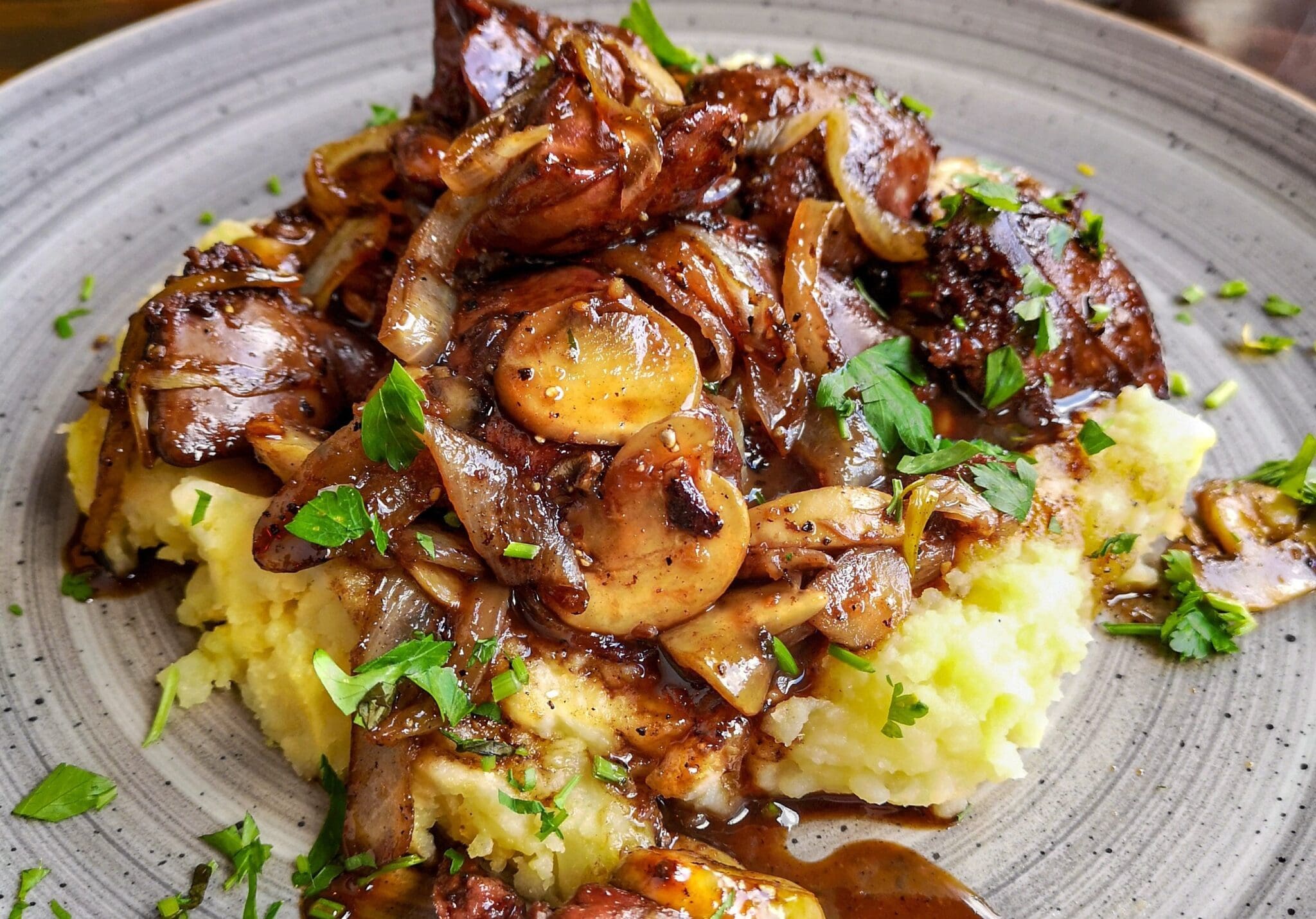
Tender pan-fried chicken livers are served over creamy mashed potato and covered with a rich, thick onion gravy. Sliced chestnuts add an earthy balance to the savoury liver, while fresh coriander provides a bright finishing touch. This is hearty, comforting home cooking that is simple to prepare and full of flavour.
Servings 4 Servings
Ingredients
Chicken Livers:
- 600 g chicken livers
- 2 tbsp plain flour
- 2 tbsp butter
- 1 tbsp vegetable oil
- salt to taste
- black pepper to taste
Onion Gravy:
- 2 large onions thinly sliced
- 2 cloves garlic finely chopped
- 200 g chestnuts cooked sliced
- 30 g butter
- 1 tbsp plain flour
- 500 ml chicken stock
- 1 tsp Worcestershire sauce
- 1 tsp Dijon mustard
- 1 tsp dried thyme
- Salt to taste
- Black pepper to taste
Mashed Potato:
- 1 kg potatoes peeled and cut into even-sized pieces
- 50 g butter
- 100 ml milk warmed
- Salt to taste
- Black pepper to taste
- 1/4 handful fresh coriander finely chopped
Instructions
- Place the potatoes in a large saucepan and cover them with cold water. Add a good pinch of salt and bring to the boil.1 kg potatoes
- Reduce the heat and simmer for approximately 15–20 minutes, or until the potatoes are completely tender when pierced with a knife.
- Drain thoroughly and allow them to steam dry for a minute or two. Return them to the saucepan and add the butter.50 g butter
- Mash until smooth, then gradually beat in the warm milk. Season generously with salt and black pepper. Keep the mash warm while you prepare the liver and gravy.100 ml milk, Salt, Black pepper
- Trim away any sinew or unpleasant-looking pieces from the chicken livers. Pat them dry with kitchen paper.
- Place the flour in a shallow bowl and season it with salt and black pepper. Toss the livers in the seasoned flour, shaking off any excess.2 tbsp plain flour, salt, black pepper
- Heat the butter and vegetable oil in a large frying pan over medium-high heat.2 tbsp butter, 1 tbsp vegetable oil
- Add the chicken livers in a single layer. Avoid overcrowding the pan because this can cause them to steam rather than fry.600 g chicken livers
- Cook for approximately 2–3 minutes on each side until nicely browned on the outside and cooked through. The exact cooking time will depend on the size of the pieces.
- Remove the livers from the pan and set them aside on a plate.
- Reduce the heat to medium and add the butter to the same frying pan.30 g butter
- Add the sliced onions and cook gently for around 8–10 minutes. Stir regularly until they soften and begin to turn golden.2 large onions
- Add the chopped garlic and cook for another minute.2 cloves garlic
- The onions should become soft and sweet without burning. If the pan becomes too dry, add a small splash of chicken stock.
- Sprinkle the flour over the onions and stir well. Cook for approximately one minute to remove the raw flour taste.1 tbsp plain flour
- Gradually pour in the chicken stock while stirring continuously. This helps create a smooth gravy without lumps.500 ml chicken stock
- Add the Worcestershire sauce, Dijon mustard and thyme. Stir well and bring the gravy to a gentle simmer.1 tsp Worcestershire sauce, 1 tsp Dijon mustard, 1 tsp dried thyme
- Add the sliced chestnuts and cook for approximately 5 minutes. The gravy should gradually thicken and coat the back of a spoon.200 g chestnuts
- Taste and adjust the seasoning with salt and black pepper.Salt, Black pepper
- Place the cooked chicken livers back into the gravy.
- Gently turn them so they become coated with the rich onion gravy. Allow everything to warm through for approximately 2–3 minutes.
- Avoid prolonged cooking at this stage because the livers can become tough if they are overcooked.
- Spoon a generous portion of creamy mashed potato onto each plate.
- Place the chicken livers on top and pour over plenty of the thick onion and chestnut gravy.
- Finish with a scattering of freshly chopped coriander.1/4 handful fresh coriander
- Serve immediately while everything is piping hot.
Equipment
- Potato Masher or potato ricer
Notes
Cook's Tips:
Don't overcook the liver: Chicken livers become tough and grainy if they spend too long in the pan. Give them a good colour on the outside, then finish them gently in the gravy.
Dry the livers first: Patting the livers dry helps the flour coating stick and encourages better browning.
Don't rush the onions: Allowing the onions to soften properly gives the gravy a natural sweetness that balances the richness of the liver.
Keep the mash creamy: Warm the milk before adding it to the potatoes. Cold milk can cool the mash and make it harder to achieve a smooth texture.
Chestnut alternative: If you cannot find cooked chestnuts, sliced mushrooms make a delicious alternative. They bring their own earthy flavour and work particularly well with the onion gravy.
Coriander is optional: I particularly like the freshness of coriander against the rich liver and gravy. However, fresh parsley or thyme would also work beautifully.
Serving Suggestion:
For a particularly hearty meal, serve the chicken liver and onion gravy with plenty of mashed potato and a simple green vegetable. Buttered peas, steamed broccoli or green beans all work well.
A piece of crusty bread is also useful for mopping up the last of that wonderfully rich gravy.
Nutrition Note:
Chicken livers are naturally rich in protein and several vitamins and minerals, particularly vitamin A, vitamin B12 and iron. They are also a very economical source of meat. Because liver is particularly high in vitamin A, it is best enjoyed as part of a varied diet rather than as an everyday meal.
Nutrition
Calories: 776kcal | Carbohydrates: 85g | Protein: 37g | Fat: 32g | Saturated Fat: 17g | Polyunsaturated Fat: 3g | Monounsaturated Fat: 9g | Trans Fat: 1g | Cholesterol: 581mg | Sodium: 526mg | Potassium: 1953mg | Fiber: 7g | Sugar: 9g | Vitamin A: 17369IU | Vitamin C: 103mg | Calcium: 120mg | Iron: 17mg
