Homemade Sourdough Loaf
A traditional sourdough loaf uses a natural starter instead of commercial yeast. Slow fermentation develops flavour, texture, and aroma. The result is a crusty loaf with a soft, open crumb.
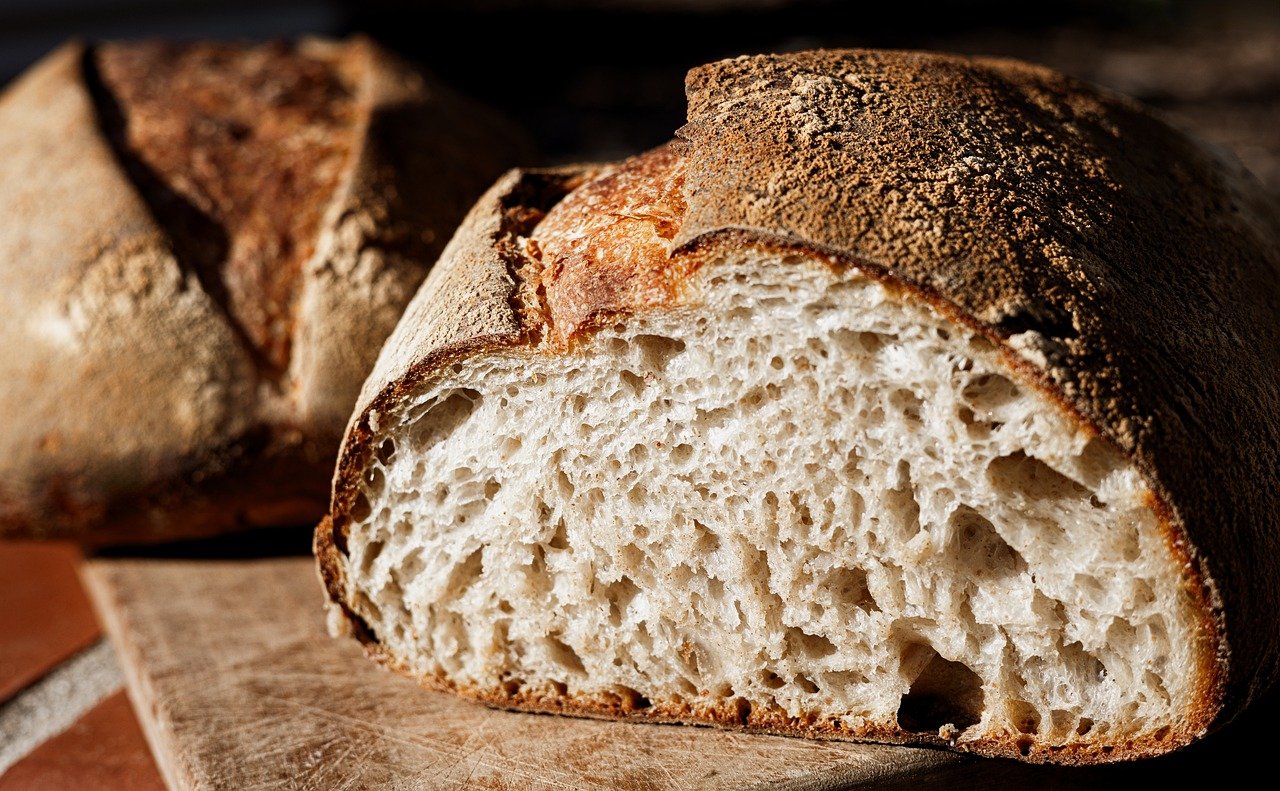
A traditional sourdough loaf uses a natural starter instead of commercial yeast. Slow fermentation develops flavour, texture, and aroma. The result is a crusty loaf with a soft, open crumb.
Servings 1 Large Loaf
Ingredients
- 450 g strong bread flour
- 50 g wholemeal flour
- 350 g water room temperature
- 100 g active sourdough starter see Notes
- 10 g fine sea salt
- flour Extra for dusting
Instructions
Mix the Dough:
- Place both flours in a large bowl. Add the water and mix until no dry flour remains. Cover and rest for 30 minutes. This step hydrates the flour and improves structure.450 g strong bread flour, 50 g wholemeal flour, 350 g water
- Add the sourdough starter and salt. Mix by hand until fully combined. The dough will feel sticky but should hold together.100 g active sourdough starter, 10 g fine sea salt
Strengthen the Dough:
- Cover the bowl and rest for 30 minutes. Perform a stretch-and-fold: pull one side of the dough upward and fold it over itself. Turn the bowl and repeat four times.
- Repeat this process three more times, resting 30 minutes between each set. The dough will become smoother and elastic.
Bulk Fermentation:
- Cover the bowl and allow the dough to rise at room temperature for 4–6 hours. The dough should increase in size by about 50% and show small bubbles on the surface.
Shape the Loaf:
- Turn the dough onto a lightly floured surface. Shape it into a round or oval loaf by folding the edges inward and tightening the surface gently. Place the dough seam-side up in a floured lined bowl.flour
- Cover and refrigerate for 8–12 hours for the final rise. Cold fermentation improves flavour and scoring.
Bake:
- Preheat the oven to 240°C with a Dutch oven inside. Turn the dough onto baking paper. Score the top using a sharp blade.
- Place the dough into the hot Dutch oven, cover, and bake for 20 minutes. Remove the lid, reduce the temperature to 220°C, and bake for another 20–25 minutes until deep golden brown.
Cool:
- Transfer the loaf to a rack and cool for at least 1 hour before slicing. Cutting too early compresses the crumb.
Notes
Use an active starter that doubles in size within 4–6 hours after feeding.
Adjust fermentation time depending on room temperature. Warmer kitchens shorten the rise.
Store the loaf at room temperature wrapped in cloth for up to three days.
Freeze sliced bread for longer storage.
Quick Serving Ideas:
Toasted with salted butter
Served with soups or stews
Used for sandwiches
Cubed for croutons
Made into breadcrumbs
Active Starter Dough:
An active sourdough starter (available in most large supermarkets) is a living mixture of flour and water that contains naturally occurring wild yeast and beneficial bacteria. These microorganisms ferment the dough and make bread rise without commercial yeast.
What makes a starter “active”?
A starter becomes active after it has been fed recently and shows clear signs of fermentation:
- It doubles in size within about 4–6 hours (depending on temperature).
- The surface looks bubbly and airy.
- It has a pleasant tangy aroma, slightly fruity or yoghurt-like, not harsh or mouldy.
- A small spoonful often floats in water, showing enough gas has developed (optional test).
- Keep about 50 g starter in a jar.
- Add 50 g flour and 50 g water.
- Mix well and leave at room temperature.
- After several hours, it will expand and become bubbly — this is when it is active and ready to bake with.
- Good dough rise
- Proper fermentation flavour
- Better crumb structure
- Reliable baking results
Nutrition
Calories: 1886kcal | Carbohydrates: 381g | Protein: 63g | Fat: 9g | Saturated Fat: 1g | Polyunsaturated Fat: 4g | Monounsaturated Fat: 1g | Sodium: 3905mg | Potassium: 632mg | Fiber: 17g | Sugar: 2g | Vitamin A: 14IU | Calcium: 97mg | Iron: 6mg
