
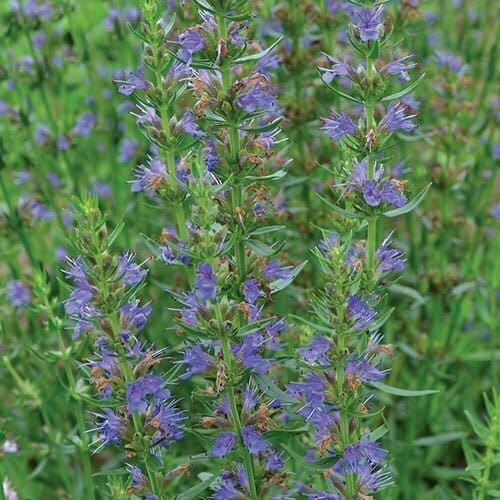
Hyssop
Hyssop (Hyssopus officinalis) is a herb that has stood the test of time. With its deep green leaves, delicate violet-blue flowers, and a scent that lingers in the air, it has been cultivated for centuries for both its medicinal and culinary properties. It is a herb that feels both familiar and mysterious—a staple in ancient herbal remedies, yet often overlooked in modern kitchens.
A Herb of Ancient Traditions
This wonderful herb has a history as rich as its aroma. In biblical times, it was used in purification rituals, and the Greeks and Romans swore by its cleansing properties. Medieval herbalists believed it could ward off illness, and even today, it remains a trusted remedy for respiratory ailments. A simple infusion of its leaves can help clear congestion, soothe a sore throat, and provide relief from seasonal coughs. It has natural antiseptic properties too, making it a popular choice for digestive tonics and herbal teas.
Bold, Bitter, and Beautiful
This is not a shy herb. Its flavour is bold—minty with a hint of bitterness, softened by floral undertones. Used sparingly, it can add depth to soups, stews, and roasted meats. In Mediterranean cuisine, it finds its way into herb blends, pairing beautifully with thyme and rosemary. The flowers, meanwhile, lend a subtle sweetness to syrups, liqueurs, and even honey infusions. It is, in fact, one of the key ingredients in the famous Chartreuse liqueur, giving it that distinctive herbal complexity.
A Garden Favourite
Beyond the kitchen and apothecary, it is a delight to grow. It thrives in dry, well-drained soil, basking in full sun, and requires little maintenance. Its vibrant flowers attract bees and butterflies, making it a perfect addition to a pollinator-friendly garden. With regular pruning, it grows into a dense, bushy plant that can be harvested all summer long.
Hyssop – A Herb Worth Rediscovering
Hyssop is more than just an old-world remedy or a forgotten ingredient—it is a herb waiting to be embraced once again. Whether brewed into tea, added to a hearty dish, or grown for its sheer beauty, it remains one of nature’s hidden gems. A little goes a long way, but once you invite hyssop into your kitchen or garden, you may find it hard to imagine life without it.