
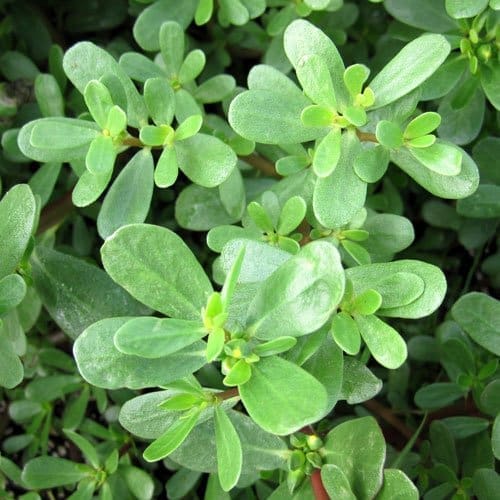
Purslane
Purslane are strange looking round leaves added to salads in India and the Middle East. It has a mild lemony flavour and is valued primarily for its crisp, crunchy texture. It is eaten both raw and cooked.
Often overlooked and even dismissed as a garden weed, Purslane is an herb worth rediscovering. With its slightly lemony tang and succulent texture, this hardy plant offers more than just visual greenery — it’s a powerhouse of nutrition and a delightful addition to both rustic and refined dishes.
Scientifically known as Portulaca oleracea, purslane thrives in warm climates and can often be found flourishing between paving stones or in untended garden beds. Yet behind its unassuming appearance lies a rich nutritional profile: purslane is packed with omega-3 fatty acids, particularly alpha-linolenic acid — a rarity among leafy greens. It’s also an excellent source of vitamins A, C, and E, magnesium, potassium, and iron.
In culinary terms, purslane is as versatile as it is nourishing. Its crisp, slightly mucilaginous stems and fleshy leaves can be tossed into salads, stirred into soups, or folded into omelettes. In Middle Eastern and Mediterranean cuisines, purslane is often mixed with yoghurt, garlic, and herbs to create a refreshing side dish or dip. Its tartness pairs wonderfully with grilled meats or can be layered into wraps for a fresh crunch.
Foraging enthusiasts often prize purslane for its resilience and abundance, but it can also be cultivated intentionally in home gardens or pots. When harvesting, opt for young, tender stems as they’re less fibrous and more flavourful.
Whether used raw or lightly sautéed, purslane brings an earthy brightness to the table. Its health benefits, coupled with its culinary adaptability, make it a wonderful herb to incorporate into the modern kitchen. As more chefs and home cooks embrace sustainable, foraged, and nutrient-dense ingredients, this modest plant is making its way from footpaths to fine dining menus — one bite at a time.