
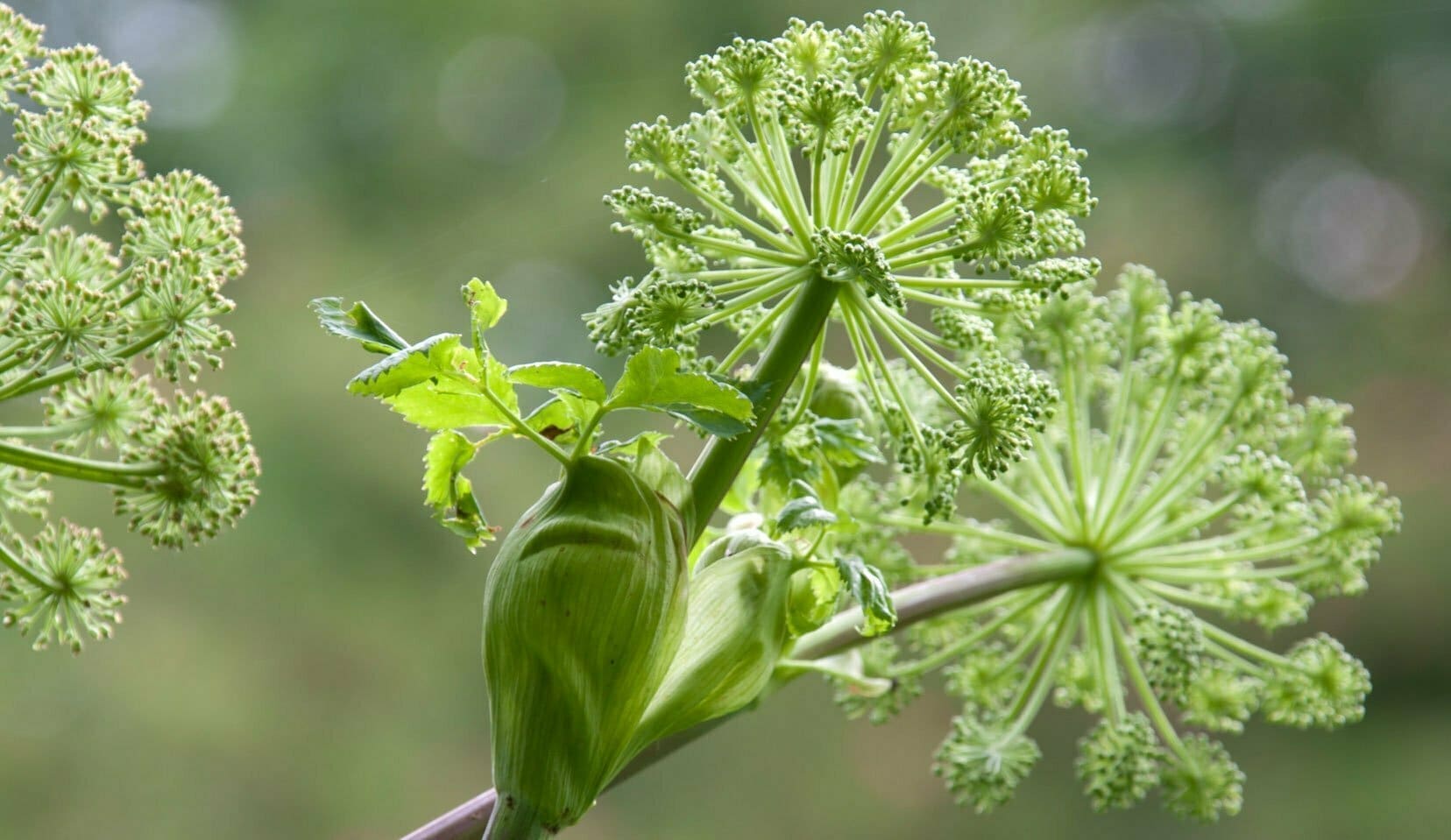
Angelica
Angelica is the “herb of the angels” is a member of the parsley family and is grown extensively in Europe. The pale green celery-like leaves and stalks are often candied and added to desserts as a garnish. The herb adds a licorice-like flavor to liqueurs and sweet wines.
Angelica (Angelica archangelica) is a fascinating herb that has been used for centuries in culinary, medicinal, and even spiritual applications. With its distinctive aromatic qualities and impressive stature, this plant holds a special place in herbal traditions across Europe and Asia. From flavouring liqueurs to acting as a natural remedy, Angelica’s versatility makes it a prized ingredient in kitchens and apothecaries alike.
Botanical Profile and Cultivation
This herb belongs to the Apiaceae family, which includes carrots, celery, and parsley. It is a biennial or short-lived perennial herb that can grow up to two metres tall. The plant is characterised by large, bright green leaves, hollow stems, and clusters of small, greenish-white flowers that bloom in summer.
It thrives in cool, moist climates and is commonly found in northern and central Europe, as well as parts of Asia. It prefers rich, well-drained soil and partial shade, though it can also tolerate full sun. The plant is typically grown from seeds, and once established, it self-seeds readily, ensuring a steady supply for those who cultivate it.
Culinary Uses of Angelica
Angelica is a prized ingredient in European cuisine, particularly in French and Scandinavian traditions. The stems, leaves, roots, and seeds all have distinct culinary applications:
- Candied Angelica: Perhaps its most famous use, the young stems and leaf stalks are boiled in sugar syrup and then dried to create a sweet, aromatic confection. Candied Angelica is often used as a decorative element in pastries and cakes.
- Liqueurs and Spirits: Angelica root is a key ingredient in several well-known liqueurs, including Chartreuse, Bénédictine, and gin. Its earthy, slightly bitter flavour enhances herbal and citrus notes in these spirits.
- Flavouring Agent: The leaves and seeds can be used to infuse soups, stews, and sauces, lending a mild, sweet, and slightly musky flavour reminiscent of liquorice or juniper.
- Herbal Teas: Dried Angelica root or leaves can be brewed into a soothing herbal tea that is often enjoyed for its digestive benefits.
Medicinal Benefits and Traditional Remedies
Angelica has been valued in herbal medicine for its wide-ranging health benefits. It has been used as a remedy for digestive issues, respiratory ailments, and even as a tonic for general well-being. Some of its notable medicinal properties include:
- Digestive Aid: This herbs is known for its carminative properties, helping to relieve bloating, indigestion, and stomach cramps. It is often included in herbal bitters and digestive tonics.
- Respiratory Support: The herb has expectorant qualities, making it useful for easing coughs, colds, and congestion. In traditional remedies, Angelica tea or tincture is consumed to clear mucus and support lung function.
- Circulatory Benefits: Angelica has been used to stimulate blood circulation and is sometimes recommended as a warming herb for those who suffer from cold extremities.
- Menstrual and Hormonal Support: In folk medicine, Angelica has been used to help regulate menstrual cycles and alleviate cramps, though scientific research on this aspect remains limited.
Caution and Considerations
While this herbs is generally safe when used in moderation, it does contain furocoumarins, compounds that can make the skin more sensitive to sunlight. Those handling fresh Angelica should be mindful of potential photosensitivity reactions. Additionally, pregnant women are advised to avoid Angelica due to its potential uterine-stimulating effects.
A Herb of History and Mythology
The name “Angelica” is said to have been inspired by a legend in which an angel appeared in a dream to reveal the plant’s healing properties during a time of plague. This sacred association led to its widespread use in medieval Europe as a protective herb against illness and evil spirits. In traditional Nordic and Celtic cultures, Angelica was also regarded as a powerful plant for warding off negative energies.
Conclusion
This is a truly remarkable herb that bridges the gap between culinary delight and herbal medicine. Whether used to flavour spirits, sweeten desserts, or ease digestive discomfort, its aromatic and medicinal qualities make it a valuable addition to any kitchen or herbal collection. With a rich history steeped in folklore and healing, Angelica continues to be a treasured herb for both chefs and herbalists today.