
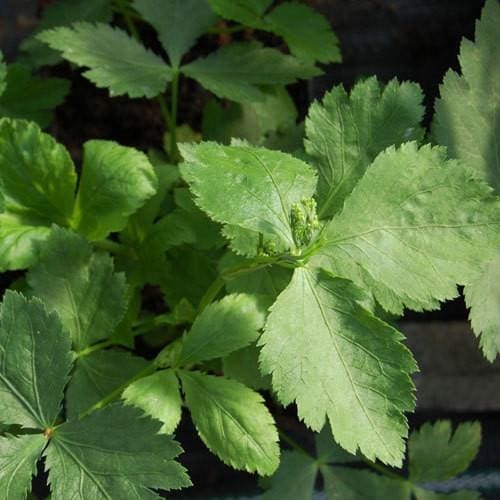
Mitsuba
If you’ve ever wandered through a Japanese market or tasted a traditional Japanese dish, you might have come across a delicate green herb with leaves that look a lot like parsley but with a unique flair. This herb, known as mitsuba (Cryptotaenia japonica), is a fragrant and versatile ingredient that’s long been treasured in Japan, where it adds a refreshing, herbal note to a variety of dishes. But its subtle elegance and complex flavour are quickly making it a star in kitchens around the world.
The Essence of Mitsuba
Mitsuba, often referred to as “Japanese parsley,” may look similar to its Western cousin, but its taste is a world of its own. It offers a flavour profile that’s a beautiful blend of parsley’s earthiness, celery’s freshness, and a gentle hint of citrus or sorrel. It’s bright and herbaceous with just the right touch of peppery warmth—perfectly balancing delicate and bold flavours.
What makes it stand out, though, is its versatility. The leaves, tender and feathery, can be used fresh, while the stems hold a more intense flavour, adding depth to broths and stews. It’s often used to garnish a dish, adding a pop of freshness and vibrant colour, but it can also be incorporated into the cooking process, bringing its distinctive taste into the heart of the dish.
A Favourite in Japanese Cuisine
Mitsuba has deep roots in Japanese culinary traditions, where it’s beloved for its ability to enhance dishes without overpowering them. In Japan, you’ll often find it featured in light, brothy soups such as suimono, where the herb lends a fresh, herbal lift. It’s also commonly added to rice dishes, salads, and pickles, where its bright flavour contrasts beautifully with the earthiness of mushrooms or the richness of fish.
One of the classic ways to enjoy this herb is in a simple mitsuba no sumashi, a clear soup made with the herb, seaweed, and delicate fish or tofu. The herb’s fresh notes infuse the broth, offering a refreshing yet grounding flavour. In a chawanmushi (savory steamed egg custard), it is often used as a garnish, providing a vibrant burst of green and a contrast to the creamy texture of the custard.
Mitsuba in the Modern Kitchen
Beyond traditional Japanese dishes, the herb is finding its way into contemporary cuisine. Its subtle flavour makes it an excellent addition to salads, where it pairs beautifully with citrus dressings or ripe summer tomatoes. It can add a fresh herbal lift to seafood dishes, especially when combined with bright lemon or orange zest. It is also great in pasta dishes, risottos, or even stirred into a fresh herb chimichurri, where it brings a unique twist to the classic condiment.
For anyone with an adventurous culinary spirit, mitsuba offers endless possibilities. It’s particularly interesting when combined with other herbs, offering a contrast to bolder flavours like basil or mint, or even as a delicate partner for rich cheeses.
Health Benefits and Symbolism
In addition to its culinary appeal, mitsuba is also valued for its health benefits. It’s rich in vitamins A and C, both of which support immune function and skin health, as well as containing iron and calcium. In traditional Japanese medicine, it’s believed to have digestive properties, making it a perfect complement to rich or heavy dishes.
It also carries symbolic meaning in Japan, where it’s associated with purity, renewal, and the freshness of nature. Its delicate beauty, which emerges in the early spring months, is a reminder of the season’s new beginnings and the simplicity of life’s small pleasures.
Growing Mitsuba: A Taste of Japan at Home
If you’re inspired to try mitsuba at home, it’s surprisingly easy to grow. Whether you’re working with a garden, balcony, or windowsill, it thrives in well-drained soil and a partially sunny spot. It’s a hardy herb that can be grown throughout the year, though it’s most commonly harvested in the cooler months, when its flavour is at its peak.
Even if you don’t have access to fresh mitsuba, many specialty grocery stores and Japanese markets now offer it in dried form, which still retains much of its aromatic charm.
Final Thoughts: A Herb Worth Discovering
Mitsuba may not be as widely known as other herbs, but its delicate, aromatic flavour and rich culinary history make it a gem worth discovering. Whether you’re adding it to a traditional Japanese dish or infusing a modern recipe with its refreshing notes, This herb has the natural ability to elevate any meal with its subtle beauty and complexity. So, the next time you find yourself in search of a fresh herb with a twist, look no further than this wonderful herb—your palate will thank you.