
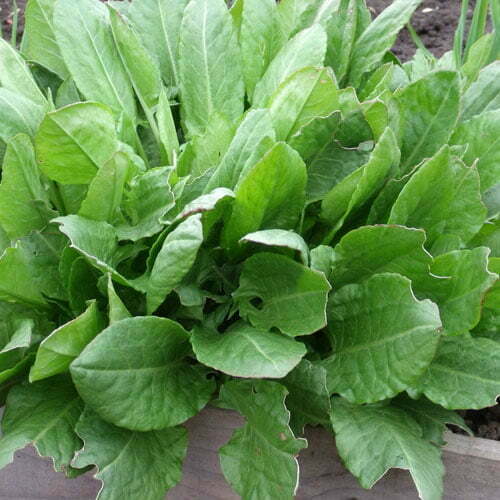
Sorrel
Sorrel is a leafy green herb known for its tangy, lemon-like flavour and is often used in culinary dishes for its refreshing acidity. Belonging to the Rumex genus and closely related to rhubarb, sorrel is a perennial plant that thrives in temperate climates, often found growing wild in Europe, Asia, and North America. Its pointed, arrow-shaped leaves range in hue from bright green to deep red, depending on the variety, and are most tender and palatable in spring and early summer.
There are several types of sorrel, with the most commonly used in cooking being Garden Sorrel (Rumex acetosa), French Sorrel (Rumex scutatus), and Red Veined Sorrel (Rumex sanguineus). Garden Sorrel is perhaps the most widely grown and used variety, prized for its sharp, lemony bite. French Sorrel tends to be milder and is often favoured for salads and sauces. Red Veined Sorrel, with its striking purple-red veins, is popular both for its visual appeal and its slightly more astringent taste.
Sorrel owes its distinct sourness to oxalic acid, a naturally occurring compound also found in spinach and beet greens. While safe to eat in moderate quantities, those with kidney issues may wish to consume it in limited amounts due to the presence of this compound.
In the kitchen, sorrel is a versatile ingredient. Its sharpness cuts through rich and creamy dishes, making it a traditional pairing in sorrel soup, often enriched with cream or potato. It also complements oily fish, such as salmon, and works beautifully in herb sauces, quiches, and egg dishes. When cooked, sorrel tends to break down quickly, resulting in a soft texture and even more intense acidity, making it ideal for quick sautés or purees.
Rich in vitamin C, fibre, and antioxidants, sorrel is not only flavourful but also nutritionally beneficial. Whether used fresh in salads or as a zingy addition to cooked meals, sorrel brings a vibrant, tart character that can lift even the simplest of dishes.