
Nasturtium
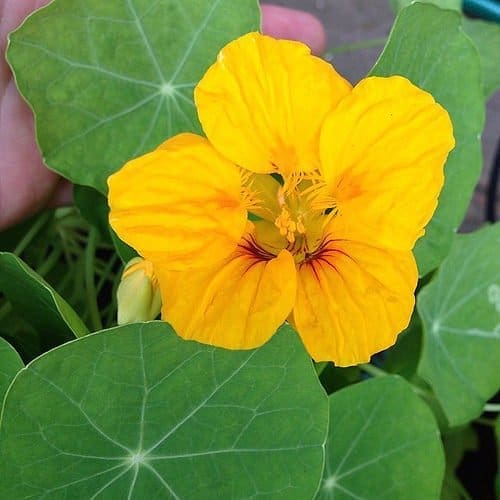
All parts of the Nasturtium plant are edible except for the roots. The leaves and stems have a peppery flavour and may be used as a substitute for watercress. The beautiful yellow and orange flowers also have a peppery flavour and make an eye-catching addition to salads. They can also be finely chopped and used to flavour butter and sauces. The immature flower buds can be pickled and used like capers.
Nasturtium, known for its vibrant blooms and rounded leaves, is a delightful herb that brings both visual appeal and culinary flair to the garden and kitchen. Belonging to the Tropaeolum genus, nasturtiums are native to South and Central America and are prized for their edible flowers, leaves, and seeds.
The flavour of nasturtium is distinctly peppery, somewhat similar to watercress, making it a zesty addition to salads, sandwiches, and even pesto. The bright orange, yellow, and red flowers not only add a splash of colour but also a mild, radish-like heat. The young leaves, tender and pungent, can be tossed into leafy greens or used as a garnish.
Beyond the plate, nasturtium has been appreciated for its health-promoting properties. Traditionally, it’s been used for its antiseptic and antibacterial qualities, particularly in herbal remedies for colds and minor infections. The seeds can also be pickled as a caper substitute—sometimes referred to as “poor man’s capers.”
Nasturtiums are easy to grow and thrive in poor soil, making them an excellent choice for novice gardeners. They prefer sunny spots and require minimal care, often sprawling attractively over garden beds or trailing from containers and hanging baskets.
Whether used to enliven a summer salad or brighten up the garden border, nasturtium is a herb that combines charm, flavour, and function in equal measure.